
%22%3E%3Crect%20width%3D%2280%22%20height%3D%2280%22%20rx%3D%2216%22%20fill%3D%22%23000000%22%2F%3E%3Cellipse%20cx%3D%2226.11%22%20cy%3D%2239.9974%22%20rx%3D%222.02993%22%20ry%3D%222.01647%22%20fill%3D%22white%22%2F%3E%3Cellipse%20cx%3D%2230.7584%22%20cy%3D%2239.9974%22%20rx%3D%222.02993%22%20ry%3D%222.01647%22%20fill%3D%22white%22%2F%3E%3Cellipse%20cx%3D%2235.4127%22%20cy%3D%2239.9974%22%20rx%3D%222.02993%22%20ry%3D%222.01647%22%20fill%3D%22white%22%2F%3E%3Cellipse%20cx%3D%2240.0827%22%20cy%3D%2226.0165%22%20rx%3D%222.02993%22%20ry%3D%222.01647%22%20fill%3D%22white%22%2F%3E%3Cellipse%20cx%3D%2240.0827%22%20cy%3D%2239.9974%22%20rx%3D%222.02993%22%20ry%3D%222.01647%22%20fill%3D%22white%22%2F%3E%3Cellipse%20cx%3D%2240.0827%22%20cy%3D%2253.9834%22%20rx%3D%222.02993%22%20ry%3D%222.01647%22%20fill%3D%22white%22%2F%3E%3Cellipse%20cx%3D%2244.7389%22%20cy%3D%2230.6765%22%20rx%3D%222.02993%22%20ry%3D%222.01647%22%20fill%3D%22white%22%2F%3E%3Cellipse%20cx%3D%2244.7389%22%20cy%3D%2239.9974%22%20rx%3D%222.02993%22%20ry%3D%222.01647%22%20fill%3D%22white%22%2F%3E%3Cellipse%20cx%3D%2244.7389%22%20cy%3D%2249.3177%22%20rx%3D%222.02993%22%20ry%3D%222.01647%22%20fill%3D%22white%22%2F%3E%3Cellipse%20cx%3D%2249.3874%22%20cy%3D%2235.3396%22%20rx%3D%222.02993%22%20ry%3D%222.01647%22%20fill%3D%22white%22%2F%3E%3Cellipse%20cx%3D%2249.3874%22%20cy%3D%2239.9974%22%20rx%3D%222.02993%22%20ry%3D%222.01647%22%20fill%3D%22white%22%2F%3E%3Cellipse%20cx%3D%2249.3874%22%20cy%3D%2244.6593%22%20rx%3D%222.02993%22%20ry%3D%222.01647%22%20fill%3D%22white%22%2F%3E%3Cellipse%20cx%3D%2254.0495%22%20cy%3D%2239.9974%22%20rx%3D%222.02993%22%20ry%3D%222.01647%22%20fill%3D%22white%22%2F%3E%3C%2Fg%3E%3Cdefs%3E%3CclipPath%20id%3D%22clip0_602_17764%22%3E%3Crect%20width%3D%2280%22%20height%3D%2280%22%20fill%3D%22white%22%2F%3E%3C%2FclipPath%3E%3C%2Fdefs%3E%3C%2Fsvg%3E)


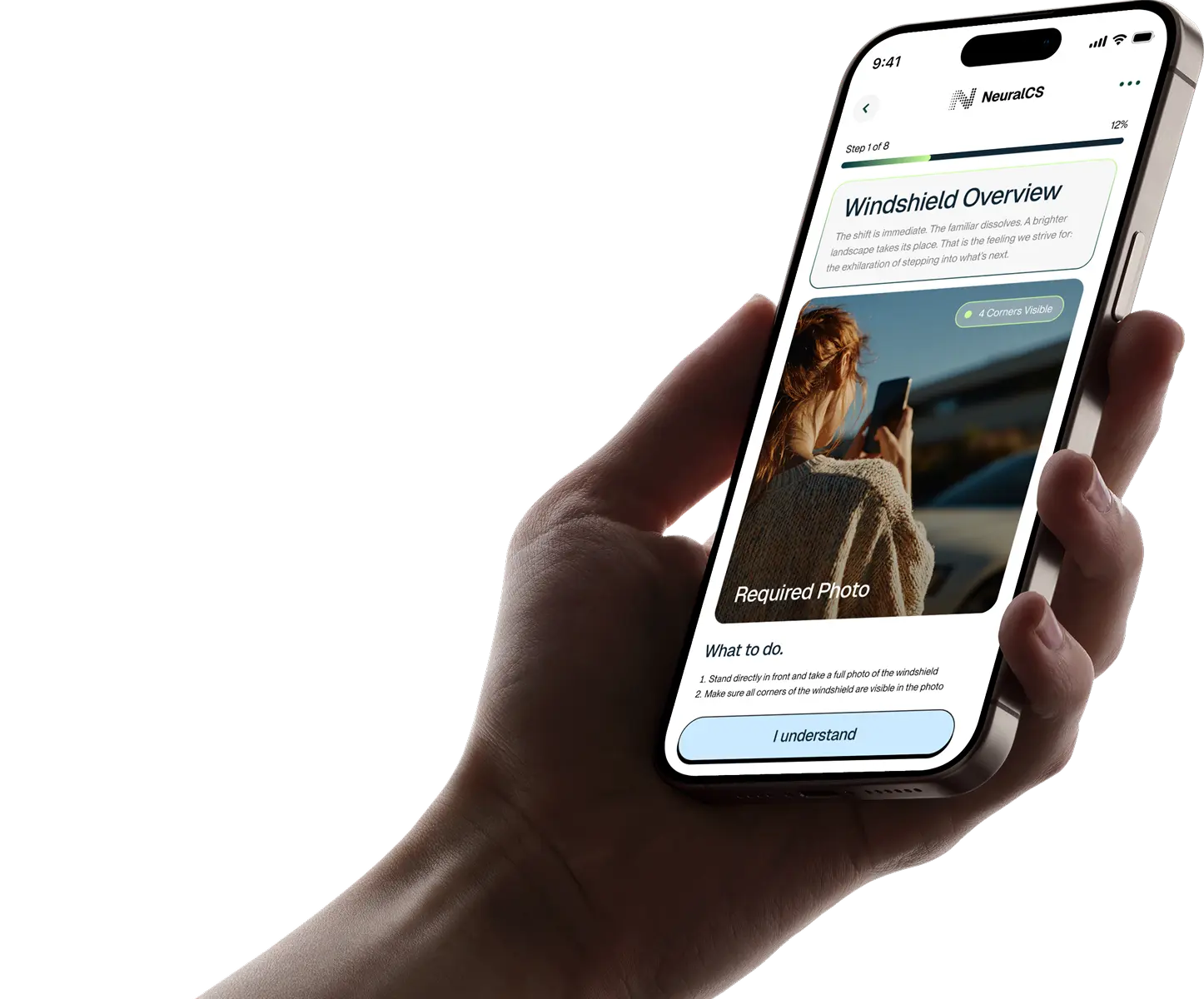

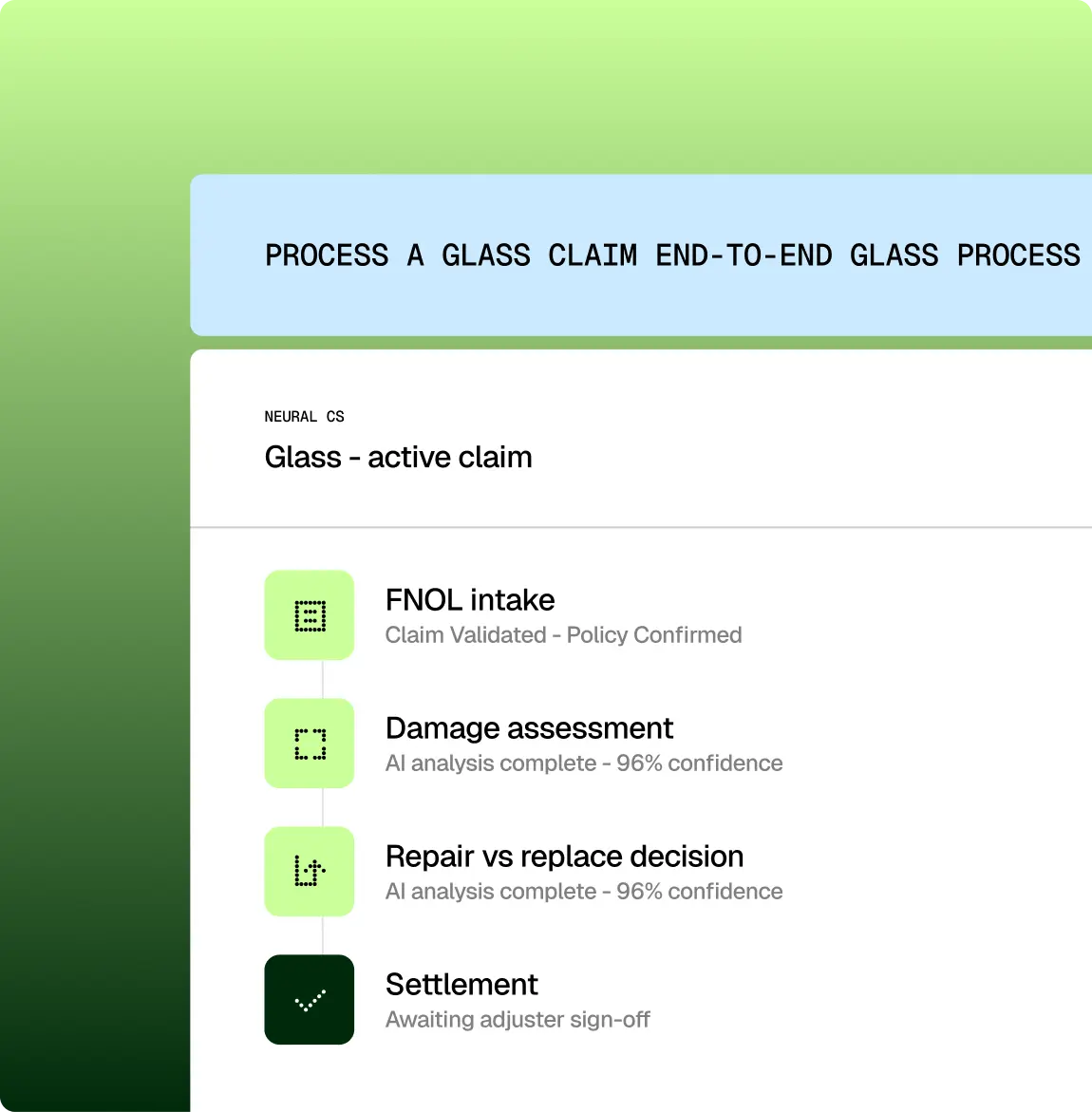
What it does
AI that reads the damage and delivers the disposition.
The AI analyzes the damage, selects the correct parts, and dispositions the claim, indicating repair-or-replace and flagging ADAS calibration requirements.
Routine claims can be completed in minutes without manual review; exceptions can be routed for human review.

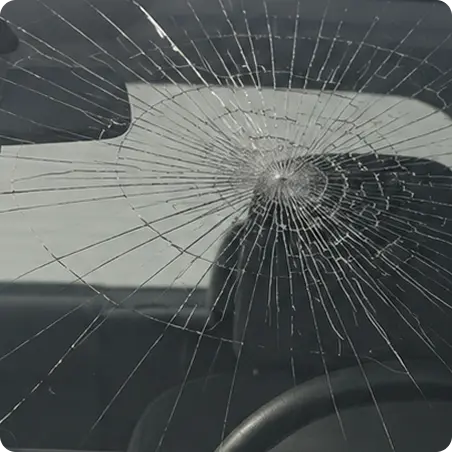

Carrier use cases
Claim intakeDamage reviewGlass validationADAS calibrationReporting
Business lines
Where NeuralCS operates
NeuralCS can operate in any market worldwide



Business applications
Six applications across the claim lifecycle.

Claim Processing + Validation
Accurate loss reporting. 24/7 claim execution. Validates and dispositions in minutes instead of hours or days.
Damage Assessment
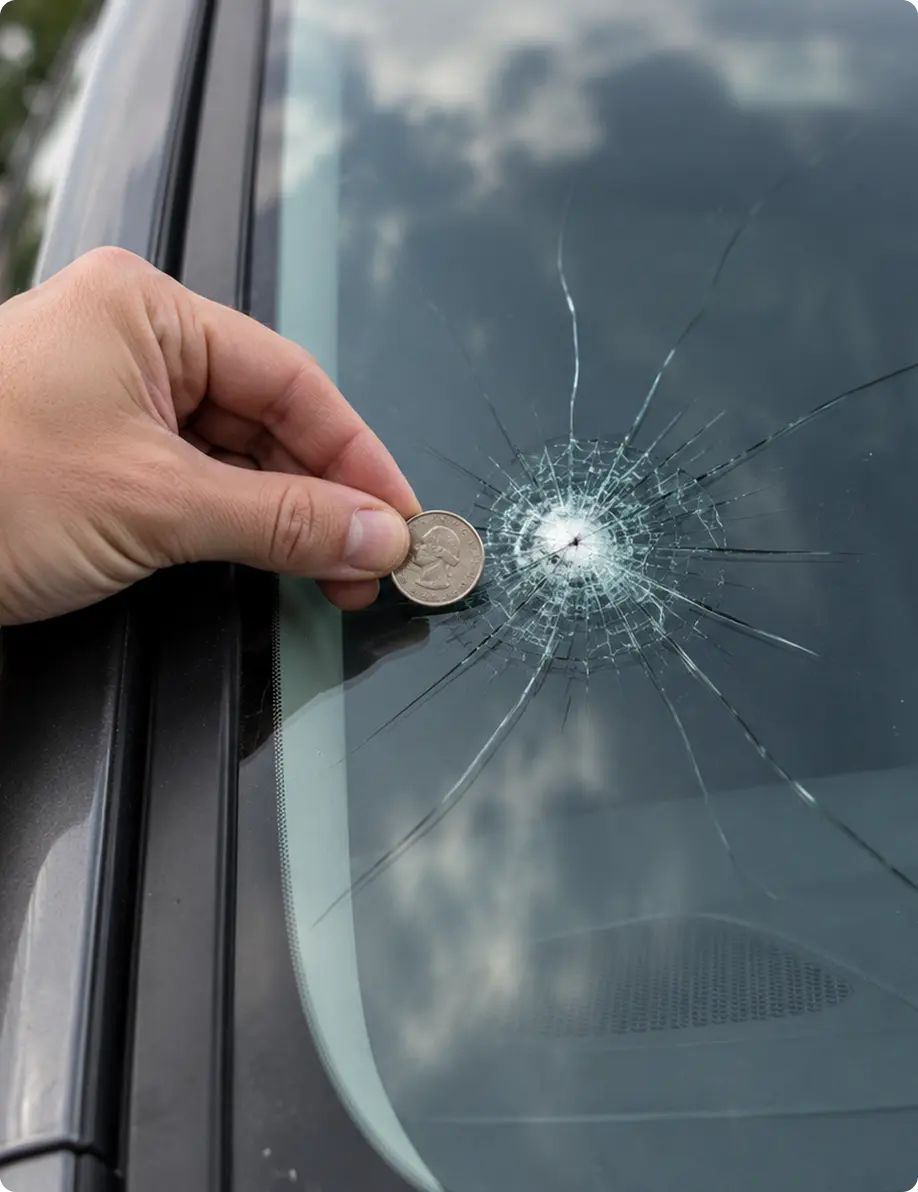
Annotates damage location, identifies break type, measures size, labels number of breaks, to ROLAGS standard.
ADAS calibration detection
Automatically flags when ADAS calibration is required after replacement, protecting carriers from liability and policyholders from unsafe repairs.
Part Selection + Build Sheet
Integrated build sheet data selects the right parts every time, achieving accurate part matching and validating ADAS calibration requirements upfront.
Data Access + Reporting
Real-time reporting with tiered access for insurance carriers and vehicle owners. Full claim information, live status, and operational visibility.
Fraud + Anomaly Detection
Surface early signals of inconsistent or suspicious claims before they reach the adjuster queue, reducing exposure without slowing down legitimate claims.
01
Submit
The policyholder submits photos through their carrier's existing intake channel or the NCS app.

Full windshield photo
Damage location with indicator
Currency placed next to damage
Vehicle logo and rear photos

02
Analyze
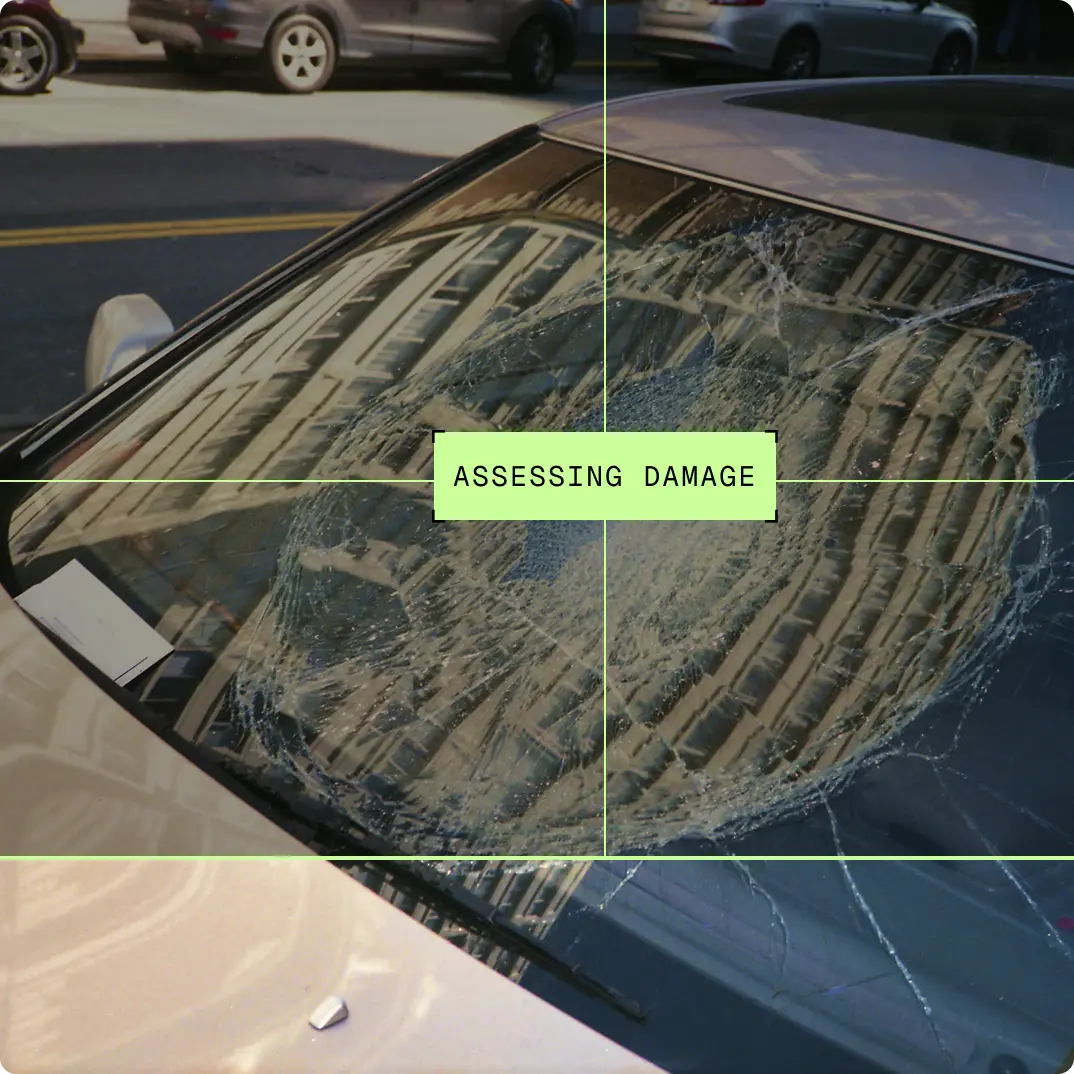
NeuralCS AI reads the photos against ROLAGS standards. Damage is annotated, classified, and measured automatically.
Break type identified
Size and location mapped
Number of breaks labelled
ADAS calibration triggered if needed
DPVA in addition to ADAS calibration
03
Disposition
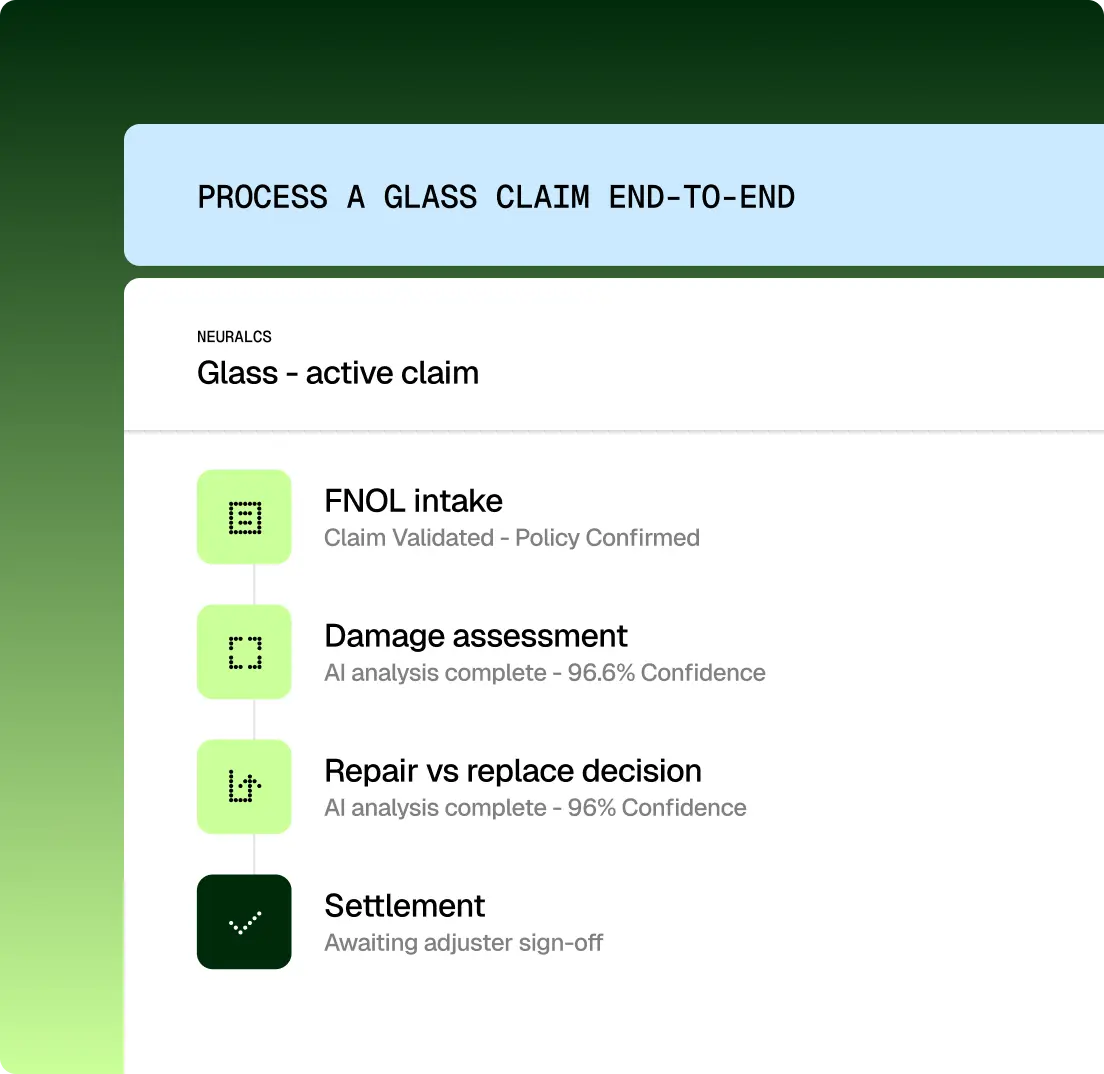
The platform selects the correct parts from build sheet data and delivers a repair-or-replace decision with full reasoning.
Repair-or-replace determination
Wear and tear
Parts selected and validated
ADAS calibration confirmed
Claim dispositioned to carrier
04
Settle
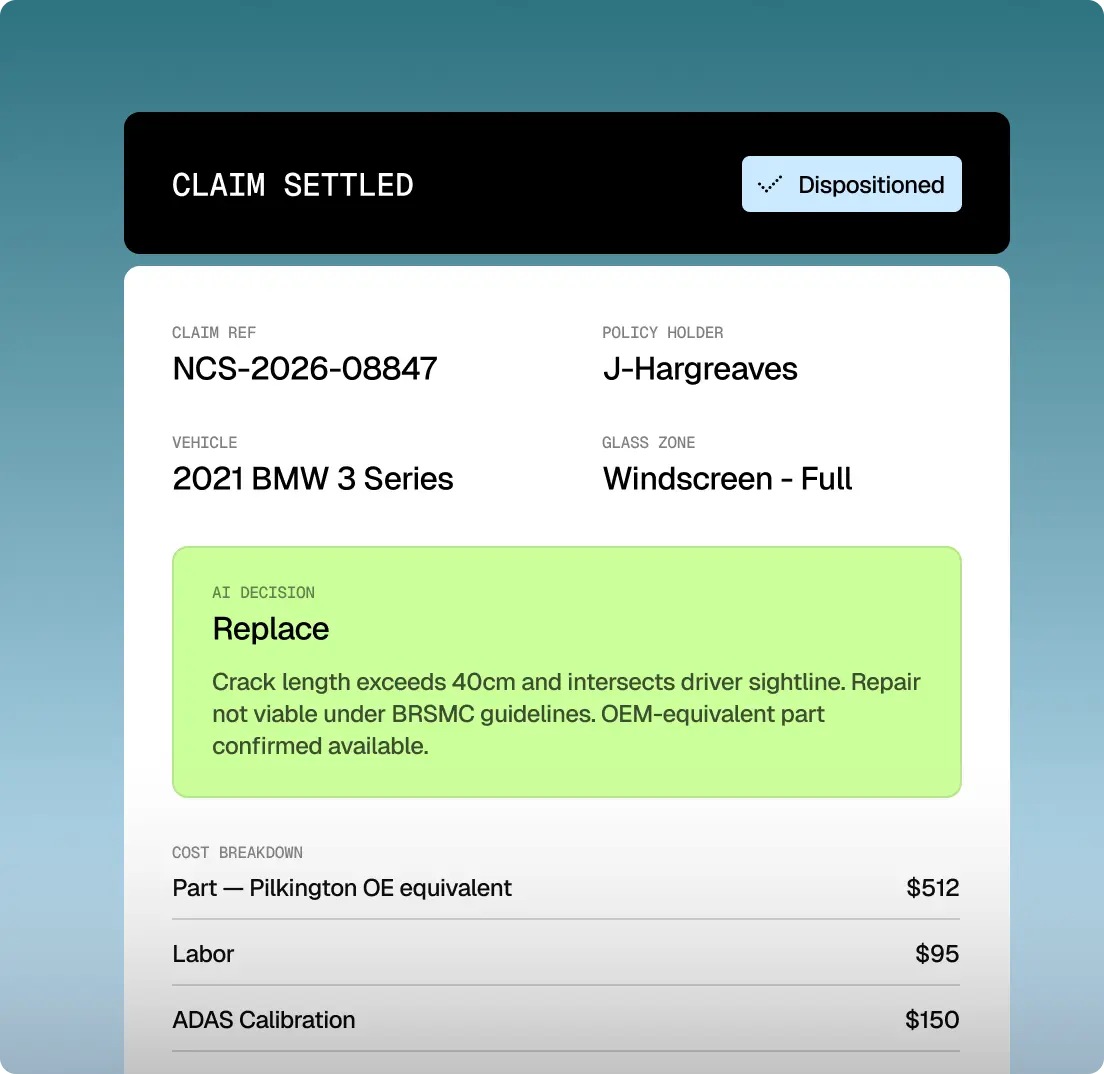
Repair network gets authorization to proceed with the appropriate repair.
Full decision audit trail
Vendor access to parts data
Real-time status reporting
Global glass claim handling
Why NeuralCS
How NeuralCS compare to manual and legacy processes.
FAQ'S
Questions from carriers.
Common questions from insurance carriers and glass vendors evaluating NeuralCS.
How does NCS fit into our existing claims process?
How does NCS fit into our existing claims process?

NCS adds a digital inspection and decisioning step to the glass-claims workflow. The insured or glass vendor submits a guided series of photos, and NCS evaluates the damage, determines the work needed, supports part selection, and indicates whether ADAS calibration is required. Exact system handoffs, integrations, and routing rules are established during implementation.
How does NCS use ROLAGS in claim decisions?
How does NCS use ROLAGS in claim decisions?
For U.S. claims, NCS uses ROLAGS-based criteria to validate windshield damage and support a consistent repair-or-replace disposition. ROLAGS provides industry-consensus terminology, definitions, processes, and recommended procedures for laminated automotive-glass repair.
What damage information does the NCS AI evaluate?
What damage information does the NCS AI evaluate?
NCS identifies the location, type, size, and number of breaks shown in the submitted images. These standardized damage attributes help create more consistent loss documentation and support the repair-or-replace decision.
How does NCS determine whether a windshield should be repaired or replaced?
How does NCS determine whether a windshield should be repaired or replaced?
NCS analyzes the submitted photo evidence and, for U.S. claims, applies ROLAGS-based decisioning to determine the appropriate work. This gives the carrier a documented assessment based on the visible damage rather than relying only on a verbal description.
How quickly does NCS assess a claim?
How quickly does NCS assess a claim?
NCS states that it can validate and disposition glass claims in minutes rather than hours or days, with 24/7 claim execution. Any guaranteed processing time, availability, or support commitment should be aligned with the carrier's contracted service-level agreement.
What does the policyholder need to submit?
What does the policyholder need to submit?
The guided inspection walks the policyholder through the required photo capture. This can include the full windshield, close-up images of each damaged area, damage-location indicators, a standard-size reference such as currency, and the windshield logo. These images also provide proof-of-loss documentation for the claim.
How accurate is the AI assessment?
How accurate is the AI assessment?
NCS standardizes image capture and evaluates specific attributes such as damage location, type, size, and count. Because performance can vary with photo quality and claim conditions, carriers should report accuracy using validated pilot results, such as agreement with expert review, image-rejection rate, and repair-or-replace accuracy.
How does NCS support proof-of-loss documentation?
How does NCS support proof-of-loss documentation?
The NCS inspection captures the photos needed to document the reported glass damage. Its guided process helps the policyholder provide clear, standardized evidence that can be associated with the claim record and reviewed by the carrier.